HF-Dex for Volume Optimization
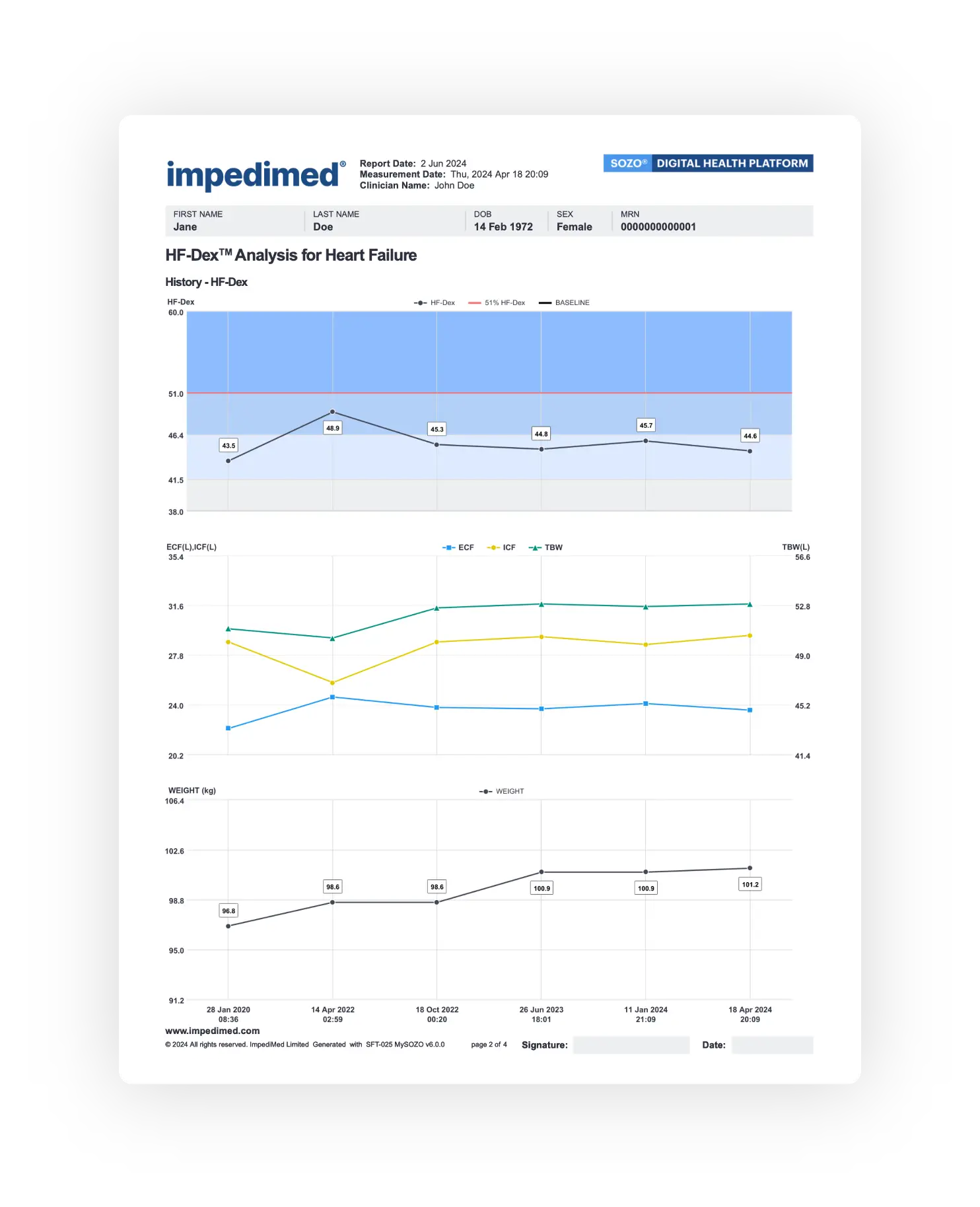
HF-Dex has 80% sensitivity and specificity for distinguishing fluid status in patients. Clear triggers, HF-Dex is 46.4% to 51% conduct further clinical investigation.3
The SOZO® Digital Health Platform’s advanced body composition and fluid insights give cardiologists a deeper, earlier understanding of patient status—with the goal of improving outcomes and reducing avoidable deterioriation.


Fluid may change long before symptoms or significant weight change. HF-Dex® gives you the clarity to see them early—so you can intervene sooner and keep patients out of the hospital.
*along with clinical judgement
Patients may feel better or worse before their weight changes. ECF provides a clearer picture of what’s happening physiologically—allowing earlier intervention to keep patients stable and out of the hospital.
Seeing What Traditional Monitoring Missed After Discharge with HF-Dex. This 87-year-old male with NYHA II–III heart failure was monitored. Despite periods of clinical stability, HF-Dex remained elevated (>51%) for nearly 100 days, aligning with two subsequent readmissions.

After the patient was treated, HF-Dex dropped toward ~50.3% and ECF toward 16.3 L, confirming effective decongestion despite minimal weight change.
Observation from Heart Failure at Home study; clinicians and patients were blinded to BIS data during follow-up.
Precision care starts with precision measurement. SOZO provides actionable insights for fluid and body composition management — at the bedside, clinic, or rehab.

HF-Dex has 80% sensitivity and specificity for distinguishing fluid status in patients. Clear triggers, HF-Dex is 46.4% to 51% conduct further clinical investigation.3

SOZO BodyComp™ Analysis measures skeletal muscle mass and fat mass, at 256 frequencies for obesity and cardiac rehab care.