NAPBC STANDARDS
Meet accreditation standards with a Lymphedema Prevention Program

Lymphedema Prevention Program

Reduce the burden of Breast Cancer-Related Lymphedema (BCRL) through early detection using bioimpedance spectroscopy (BIS) and intervention.

Nurse and Patient
CLINICAL PRACTICE GUIDELINES

NCCN Clinical Practice Guidelines in Oncology (NCCN Guidelines®) for Survivorship

The NCCN Guidelines® are consistent about the importance of early detection of lymphedema and use of an objective tool, such as bioimpedance spectroscopy.

Referenced with permission from the NCCN Clinical Practice Guidelines in Oncology (NCCN Guidelines®) for Survivorship V.1.2024. © National Comprehensive Cancer Network, Inc. 2024. All rights reserved. Accessed March 29, 2024. To view the most recent and complete version of the guideline, go online to NCCN.org. NCCN makes no warranties of any kind whatsoever regarding their content, use or application and disclaims any responsibility for their application or use in any way.


ACCREDITATION STANDARDS

NAPBC Optimal Resources for
Breast Care

The NAPBC Survivorship standards reference these evidence-based guidelines for lymphedema care.

Used with permission of the American College of Surgeons, Chicago, Illinois. The original source for this information is the American College of Surgeons. Content does not reflect the views or interpretations of the American College of Surgeons.

Chronic BCRL Management Can be an Expensive, Complex, and Lifelong Issue for Patients

1 in 5 breast cancer patients will be impacted by lymphedema1

Patients suffering from BCRL often experience isolation, body dissatisfaction and depression2

Increased risk of wounds and infection with potential for hospitalization are common side effects3,4

BCRL can be Resolved with Early Detection and Intervention

It is Well Established that Breast Cancer Related Lymphedema (BCRL) can be Resolved with Early Detection and InterventionIt is Well Established that Breast Cancer Related Lymphedema (BCRL) can be Resolved with Early Detection and Intervention

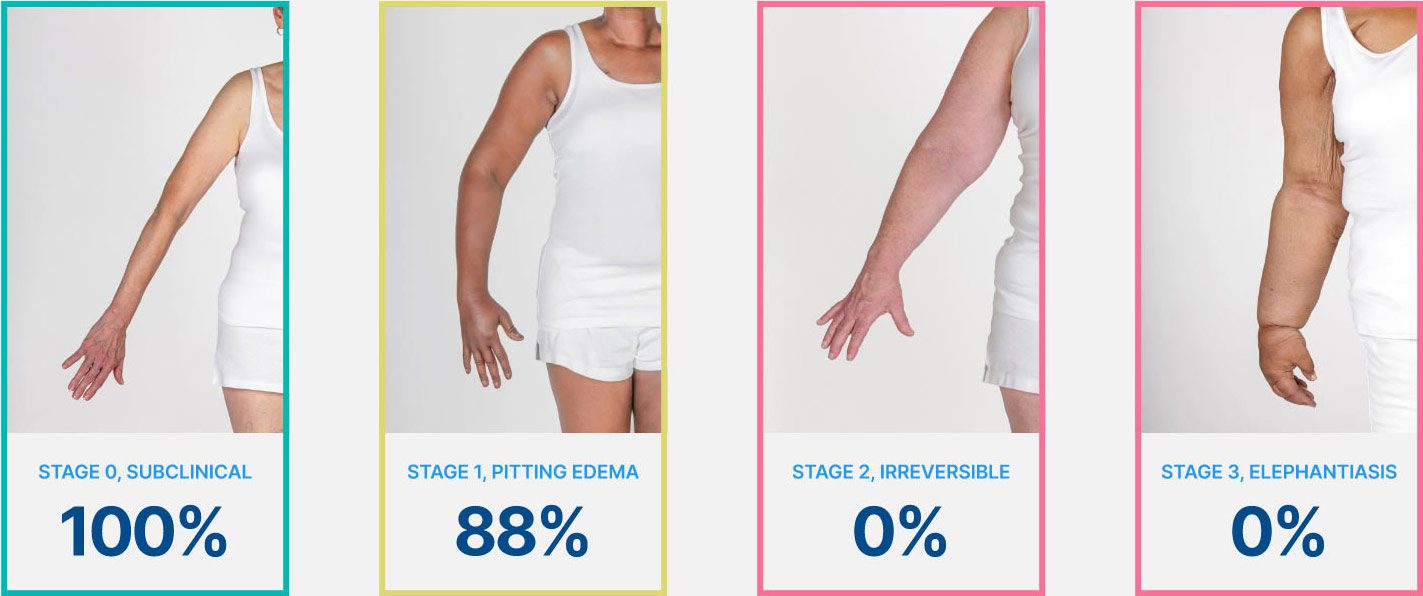
Lymphedema develops in stages, and a university of Kansas study found that when lymphedema is detected at stage 0 or stage 1 it is reversible, but in stages 2 and 3 it is not. These findings demonstrate how early conservative intervention and prospective monitoring with BIS can significantly lower rates of BCRL and persistent BCRL (pBCRL).5

Bioimpedance Spectroscopy (BIS) is the Most Effective Method for Lymphedema Detection at the Subclinical Stage

The SOZO® Digital Health Platform is the only FDA-cleared solution using BIS technology for the clinical assessment of lymphedema.

Implement an Evidence-Based Protocol for Optimal Patient Outcomes

Test

Test all patients at-risk of lymphedema using SOZO® with L-Dex

  • Baseline
  • Year 1-3: Every 3 months
  • Year 4-5: Every 6 months
  • Year 6+: Annually8

Trigger

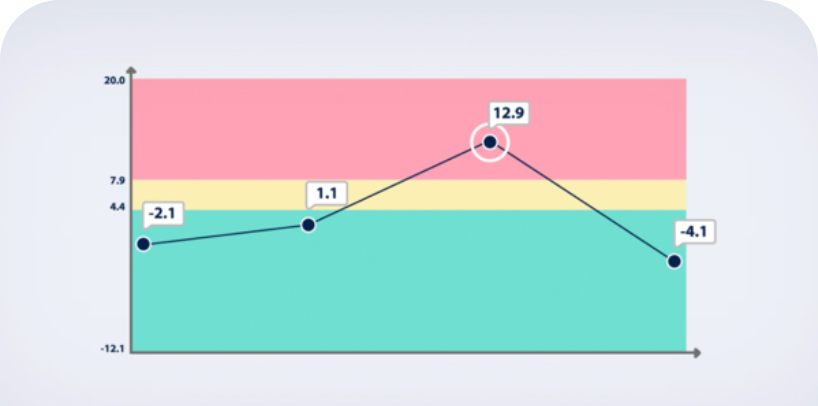
L-Dex increase of 6.5 or more from baseline indicates a likelihood of subclinical lymphedema8

Treat

At-home treatment with compression garments

  • 4 weeks
  • 12 hours per day8

Discover the Benefits of a Lymphedema Prevention Program

Effective Care Coordination & Collaboration

Effective Care Coordination & Collaboration

Enhance survivorship and maximize patient health for breast cancer patients by adopting a unified approach to the treatment of breast cancer related lymphedema (BCRL).

Effectively Meet Accreditation Standards for BCRL Care

Effectively Meet Accreditation Standards for BCRL Care

Successfully align with standards like the National Accreditation Program for Breast Centers (NAPBC) and the Commission on Cancer (COC), which both support lymphedema management throughout cancer treatment.

References

  1. Gillespie, T. C., Sayegh, H. E., Brunelle, C. L., Daniell, K. M., & Taghian, A. G. (2018). Breast cancer-related lymphedema: risk factors, precautionary measures, and treatments. Gland Surgery, 7(4), 379–403. https://doi.org/10.21037/gs.2017.11.04
  2. Teo I, et al. Examining pain, body image, and depressive symptoms in patients with lymphedema secondary to breast cancer. Psychooncology. 2015 Nov;24(11):1377-83. Doi:10.1002/pon.3745. Epub 2015 Jan 20. PMID: 25601235.
  3. Shah C, et al. The impact of monitoring techniques on progression to chronic breast cancer‑related lymphedema: a meta‑analysis comparing bioimpedance spectroscopy versus circumferential measurements. Breast Cancer Research and Treatment 2020; https://doi.org/10.1007/s10549-020-05988-6.
  4. Dean LT, et al. “It still affects our economic situation.” A long-term economic burden of breast cancer and lymphedema. Supp Care Canc 2017; https://doi.org/10.1007/s00520-018-4418-4.
  5. Kilgore L, at al. Reducing breast cancer-related lymphedema (BCRL) through prospective surveillance monitoring using bioimpedance spectroscopy (BIS) and patient direction self-interventions. Ann Surg Oncol 2018;http://doi.org/10.1245/s10434-018-6601-8.
  6. Ridner SH, et al. A Randomized Clinical Trial of Bioimpedance Spectroscopy or Tape Measure Triggered Compression Intervention in Chronic Breast Cancer Lymphedema Prevention. Lymphatic Research & Biology 2022.
  7. Fu MR, et al. L-dex ratio in detecting breast cancer-related lymphedema: reliability, sensitivity, and specificity. (2013). L-dex ratio in detecting breast cancer-related lymphedema: reliability, sensitivity, and specificity. PubMed. https://pubmed.ncbi.nlm.nih.gov/24354107
  8. Shah, et al. Bioimpedance Spectroscopy for Breast Cancer Related Lymphedema Assessment: Clinical Practice Guidelines. Breast Cancer Research and Treatment 2022.