Empower Your Survivorship Through Early Detection

By addressing lymphedema early, you can take charge of your health and play an active role in your care.

Get Tested
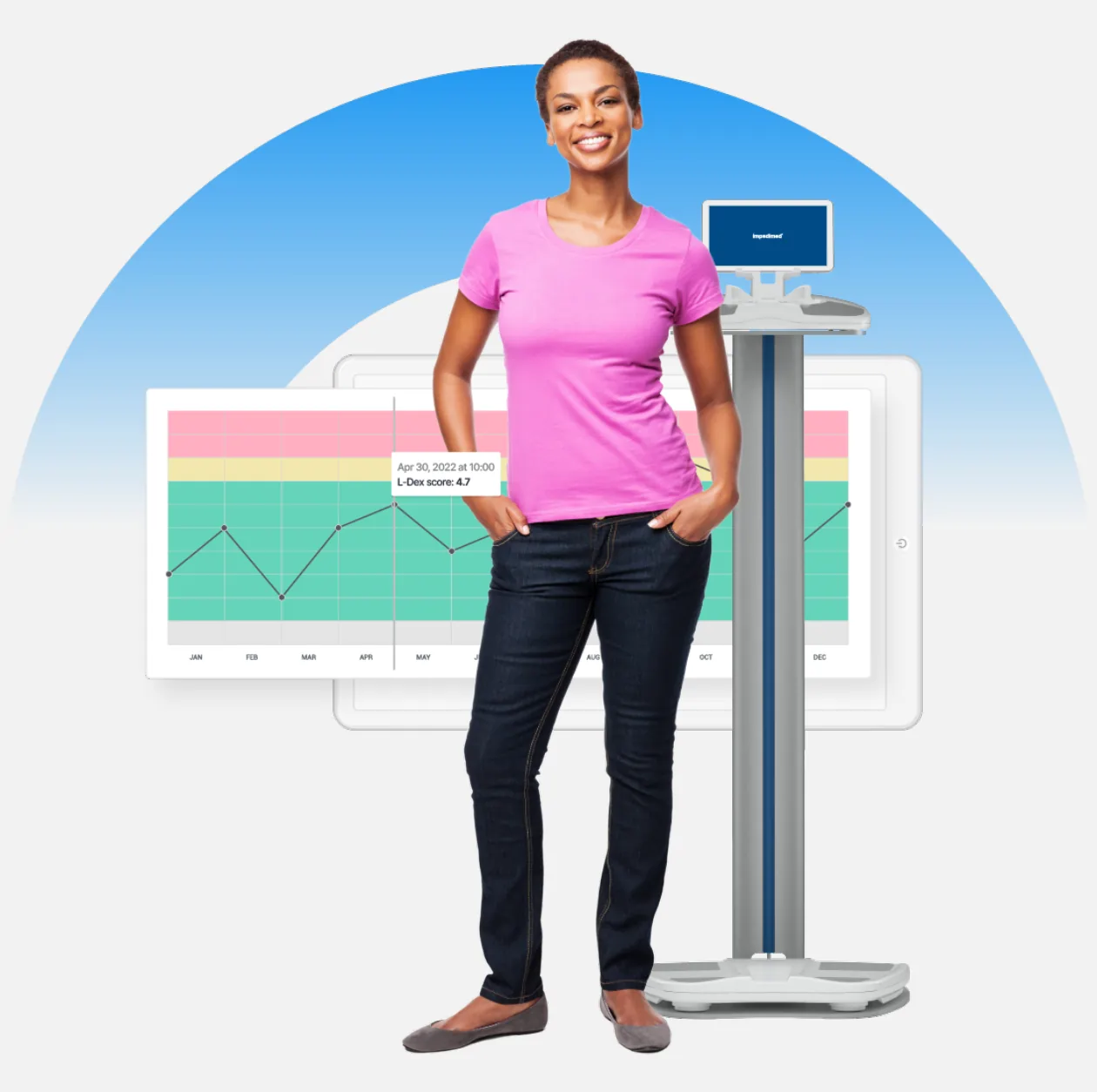
Empower Your Survivorship Through Early Detection

Understand Your Risk for Breast Cancer-Related Lymphedema (BCRL)

The lymphatic system runs like a super highway in your body. Certain cancer treatments damage and block the lymphatic system. Lymphedema occurs when fluid builds up due to a block in the lymphatic system.

1 in 5 breast cancer survivors will be impacted by arm lymphedema resulting from their cancer treatment1:

  • Surgery
  • Radiation
  • Taxane-based chemotherapy

If lymphedema is left untreated:

  • It can cause painful swelling
  • It can lead to infection
  • It can become a life-long condition

The lymphatic system

Take Steps to Prevent Chronic BCRL

1. Ask for a SOZO® test to measure your L-Dex® score

  • L-Dex measures extra fluid in your arm at risk (even before you can feel it)
  • This helps detect early lymphedema

2. Get regular L-Dex testing on SOZO

  • Before cancer treatment as a baseline
  • During regular follow-ups
  • If you have symptoms

3. Assess yourself for common BCRL symptoms between tests

  • Feeling of heaviness or tightness
  • Difficulty moving your arm or hand
  • Swelling in your arm, hand, and fingers

Patient with Nurse using SOZO

What if I Need Lymphedema Treatment?

In most people, lymphedema starts with mild symptoms, which is the best time to treat. Treatment for early lymphedema is simple and can be done at home with compression garments.

At-Home Compression Therapy

  • Wear your compression garments daily for 4 weeks (28 days) for 12 hours per day
    • Put your garments on when you get up in the morning
    • Take your garments off before going to bed at night
    • Remember to check your garments periodically to avoid wrinkles
  • After 4 weeks, return to your healthcare provider to have your L-Dex score tested using SOZO device and for your lymphedema assessment

Early lymphedema simple at-home treatment

FIND A PROVIDER
Get Tested with Your L-Dex Score

Find a place near you to get your L-Dex score tested.

Talk to Your Cancer Care Team

Your cancer care team is there to support you through diagnosis, treatment, and survivorship.
Use these tools to talk to your cancer care team about getting tested with your L-Dex score.

TALK TO YOUR CARE TEAM

Educate & Inform

Your doctor, nurse, or therapist may not be aware of the latest technologies for early detection of lymphedema. Print this handout and take it to your next visit. Ask them what they think.

TALK TO YOUR CARE TEAM

Questions to Ask

Not sure how to start a conversation with your doctor, nurse, or therapist about lymphedema? Print these questions and ask them during your next visit.

Insurance Coverage

Will my insurance cover the cost of an L-Dex test?

Individual insurance carriers have different policies about covering the cost of an L-Dex test. To learn more, contact your insurance carrier or ask your healthcare provider.


Will my insurance cover the cost of my lymphedema treatment?

Individual insurance carriers have different policies about covering the cost of lymphedema treatment. To learn more, contact your insurance carrier or ask your healthcare provider.


References

  1. Gillespie TC, et al. Breast cancer-related lymphedema: risk factors, precautionary measures, and treatments. Gland Surg 2018;7(4):379-403.